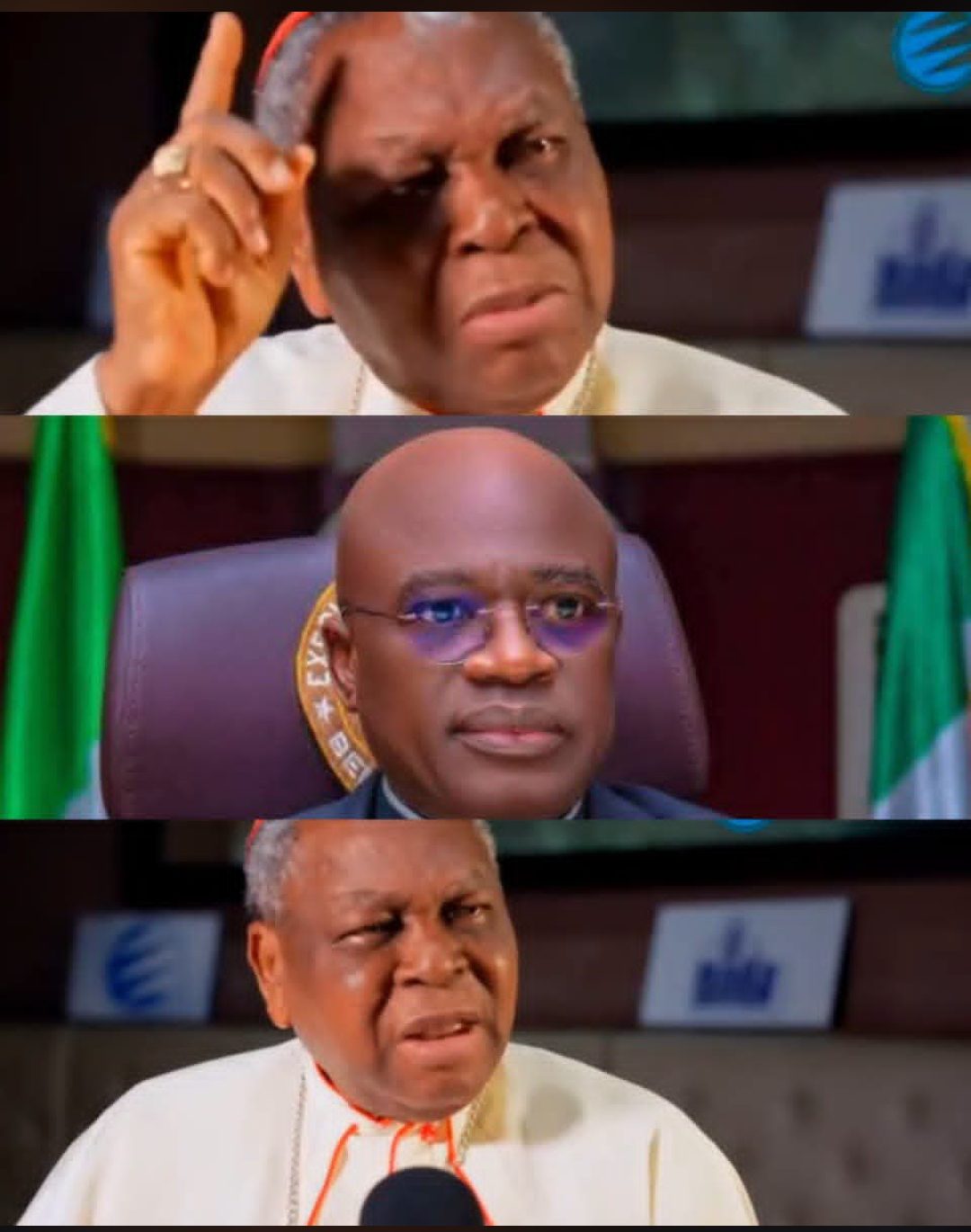
John Cardinal Onaiyekan, the former Archbishop of Abuja, has shed light on the official ecclesiastical status of Benue State Governor, Rev. Fr. Hyacinth Alia, clarifying why the cleric-turned-politician remains barred from performing his priestly duties.
Speaking during a recent interview regarding priests entering active politics, the senior Catholic prelate explained that Governor Alia’s decision to pursue public office violated canonical guidelines, leaving his local bishop with no choice but to issue a formal suspension.
According to Cardinal Onaiyekan, the Catholic Church has strict rules regulating whether a priest can take up political roles, and those requirements were not met in Father Alia’s case.
“I have nothing against Father Alia, but… the law of our church has not been followed,” Onaiyekan stated. “He did not meet those criteria, and his bishop told him no. He decided he would go, and his bishop said, ‘Okay, if you go, I suspend you.'”
Understanding the Canon Law on Priestly Duties
Under Catholic Canon Law, ordained priests are generally prohibited from holding public offices that involve the exercise of civil power. When Fr. Alia declared his intention to contest the Benue State governorship election under the All Progressives Congress (APC), the Catholic Diocese of Gboko officially suspended him from public ministry.